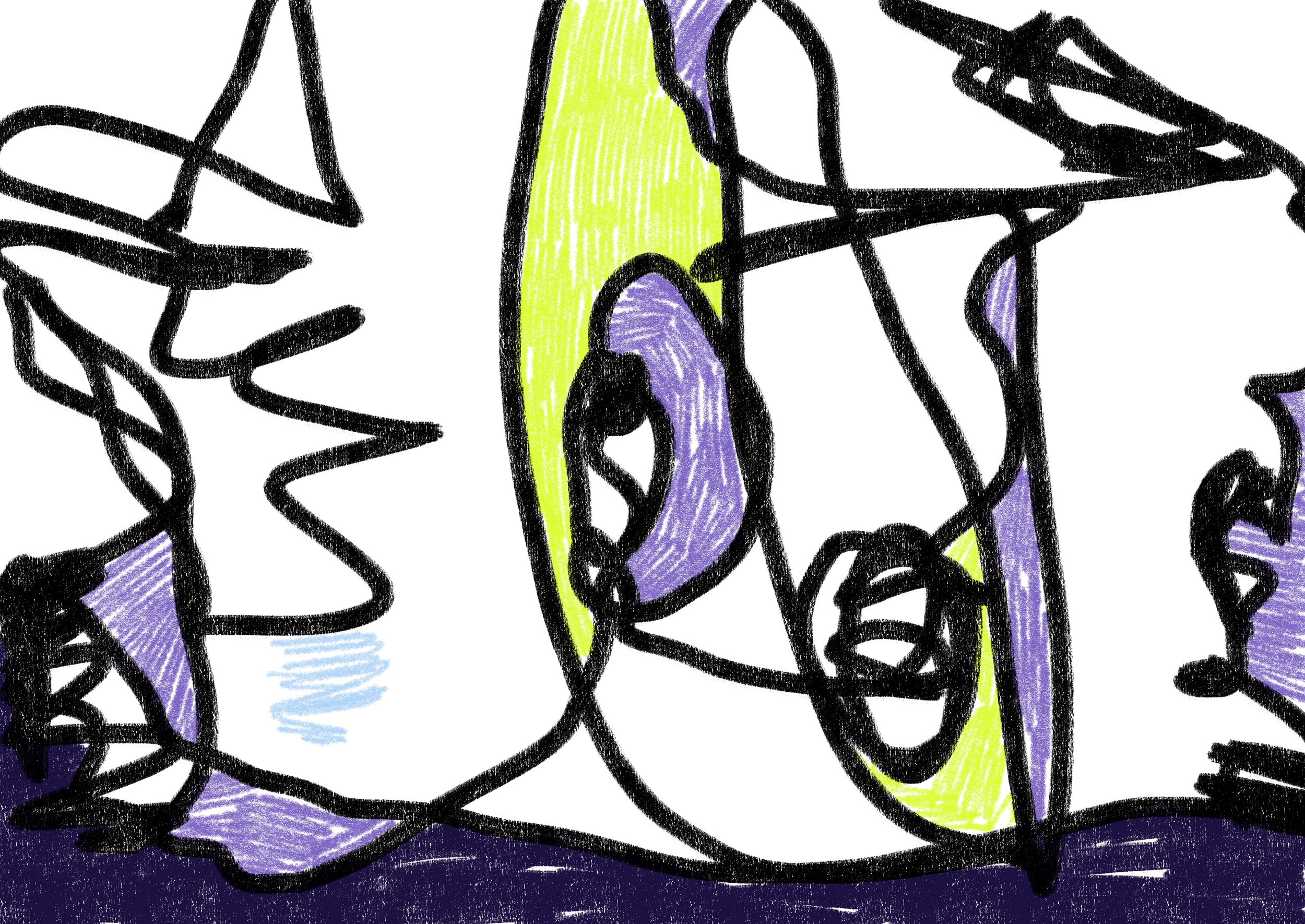
Day 15 I have forgotten how to play
Have you ever felt a strong urge to leave your responsible, well-adjusted adult self behind and return to a headspace you could only access as a child?
When everything starts to feel heavy, life can begin to feel a little like a trap, quietly pulling us into resignation and endless doom scrolling, until play starts to seem like something distant, almost irrelevant. Who even has time for that?
Or maybe you’ve been at a party, and a few people get up to dance while you’re sitting at the side, feeling that small, persistent pull from within. Your inner child wants to join, but something holds you back. You start wondering whether you’ll look awkward, whether you’ll get it wrong, and before you know it, it feels much safer to stay seated, to observe, and perhaps even to judge them a little for their immaturity.
When we deny ourselves the pleasure and quiet regulation that comes from play, something in us begins to harden. We can become a little more bitter, a little more closed, and moments of joy or silliness in others start to feel strangely irritating, as if they are no longer meant for us.
And yet, when I do allow myself to play, my whole perception shifts. I become aware of my body and my movement, not in terms of how I might appear from the outside, but in how it actually feels to be inside of it. There is a sense of openness and safety, a kind of soft authenticity that is difficult to access in any other way. I might be dancing to my favourite music in the dark, wearing something slightly ridiculous, or throwing paint onto a canvas without any particular plan. Sometimes it’s as simple as climbing a tree as if I were ten years old again. In those moments, I feel like a happy, soft, fluid alien, just experiencing life on this planet.
At the same time, there are many moments when I want to play and don’t. Fear gets in the way, and I become hyper-aware of how I might be perceived. The thought appears that I won’t be taken seriously, that I’m somehow failing at being a “proper” adult. Play starts to feel indulgent, even selfish.
But that is a kind of trap.
Because when I don’t play, I can feel the absence of it quite clearly. I become more tense, less open, and not particularly pleasant to be around. My cup feels empty, and no matter how stable or put-together things may look on paper, there is a sense of poverty somewhere deeper inside.
If you recognise yourself in this, you are not alone in it.
We all need, from time to time, to be reminded that we have permission to play, to prioritise joy and self-expression, and to make space for it in our lives, even if that means letting something else fall away for a while. Your version of play might look entirely different from mine, and that is exactly as it should be. There is no correct way to do this, only the way that brings you back into a sense of aliveness.
It may feel unfamiliar at first, especially if this is a part of yourself that you have been disconnected from for a long time. You wouldn’t expect yourself to run a marathon the first time you step into a gym, and the same kind of patience applies here. Play needs a bit of space, a bit of attention, and a willingness to let it grow slowly.
I am still learning what play looks like for me, and I find myself wanting to bring more of it not only into my private life, but into my work, my expression, and the way I move through the world. There is something vulnerable about playing, and even more so about being visible in it, about allowing others to witness that softness and that silliness.
And yet, I keep coming back to the intuition that this is part of the medicine we need.
I hope you might feel invited to explore this with me, in your own way and at your own pace. Maybe we can begin to create spaces, however small, where that quieter voice within us feels safe enough to speak again.
Have a wonderful day, wherever you are
Celine