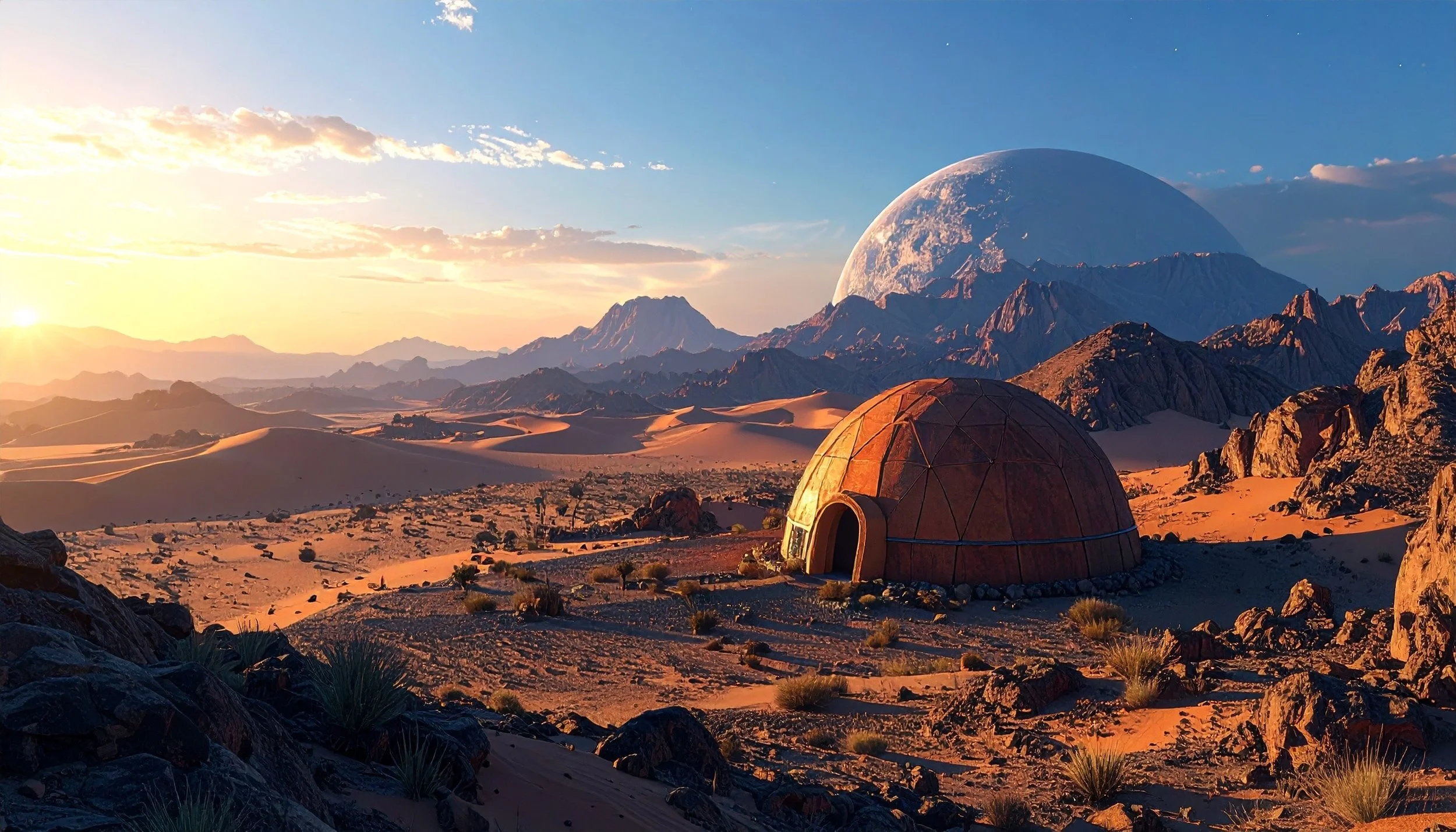
Day 36 — I Have a Bone to Pick with The Martian
I recently rewatched The Martian and despite it being science fiction, there was one plot point that I found incredibly unrealistic.
So the gist of the movie is that an astronaut gets stranded on Mars, is left for dead, and then has to figure out how to stay alive long enough to be rescued.
All of that is fine.
But how did this man not bring his own music?
Later in the movie, as he goes about his chores, he complains about the disco playlist his crewmate left behind. Dude. You could have packed your own playlist. It’s not like MP3 files are heavy.
Seriously, I could make a carefully curated emotional-support playlist just for going grocery shopping. How did this supposedly brilliant astronaut leave Earth — for MARS — without bringing music he actually liked?
Deep breath.
But honestly, I think this trope connects to a wider cultural idea about astronauts as superhumans: people who have somehow outsmarted ordinary mammalian needs and can use science to solve every problem. Walking brains in jumpsuits.
This annoyance links directly into one of my current obsessions: habitat design.
Back in the early days of space travel, missions only lasted a few days, so survival was the main concern. But now astronauts spend months living in space, and suddenly the “small” things stop being small. Lack of sleep, constant machine noise, poor lighting, no privacy, social tension — all of these things slowly wear people down. Even the nicest person on Earth can become a gremlin under the wrong conditions.
I understand that space travel is incredibly expensive and technically challenging, but that does not remove the need to seriously think about cohabitation under pressure in tiny enclosed environments.
If we genuinely plan to build long-term lunar habitats the way the Artemis program suggests, these questions become unavoidable. Otherwise we are eventually going to end up with moon murder and absolutely no moon justice system.
This also reminded me of a podcast I listened to called The Secret History of Antarctica: Death on Ice. One of the things I found most unsettling was how poorly the psychological screening was handled to predict who will cope well with extreme isolation, darkness, confinement, and stress.
And unfortunately, women are often at greater risk in isolated environments, especially when it comes to harassment and sexual violence. If we are serious about sending humans into extreme environments — whether Antarctica, submarines, space stations, or future moon bases — safety cannot just mean protection from vacuum exposure or radiation. It also has to mean social and psychological safety.
Either a habitat is designed well enough to protect people, or we need to be much more honest about the risks involved.
I think that if humanity wants its presence in these harsh environments to represent collaboration, curiosity, and collective progress, then we need to stop pretending humans are emotionless machines. We are fragile creatures. Environment matters. Lighting matters. Sound matters. Personal space matters. Music matters.
And honestly, all of this feels surprisingly relevant to life on Earth too.
Have you ever thought about what you would need in order to truly thrive in a tiny space?
These debates can seem very distant and futuristic, but I think the research going into habitat design could genuinely improve everyday life for all of us — especially people living in dense cities or stressful environments.
I hope you are well wherever you are.
Celine